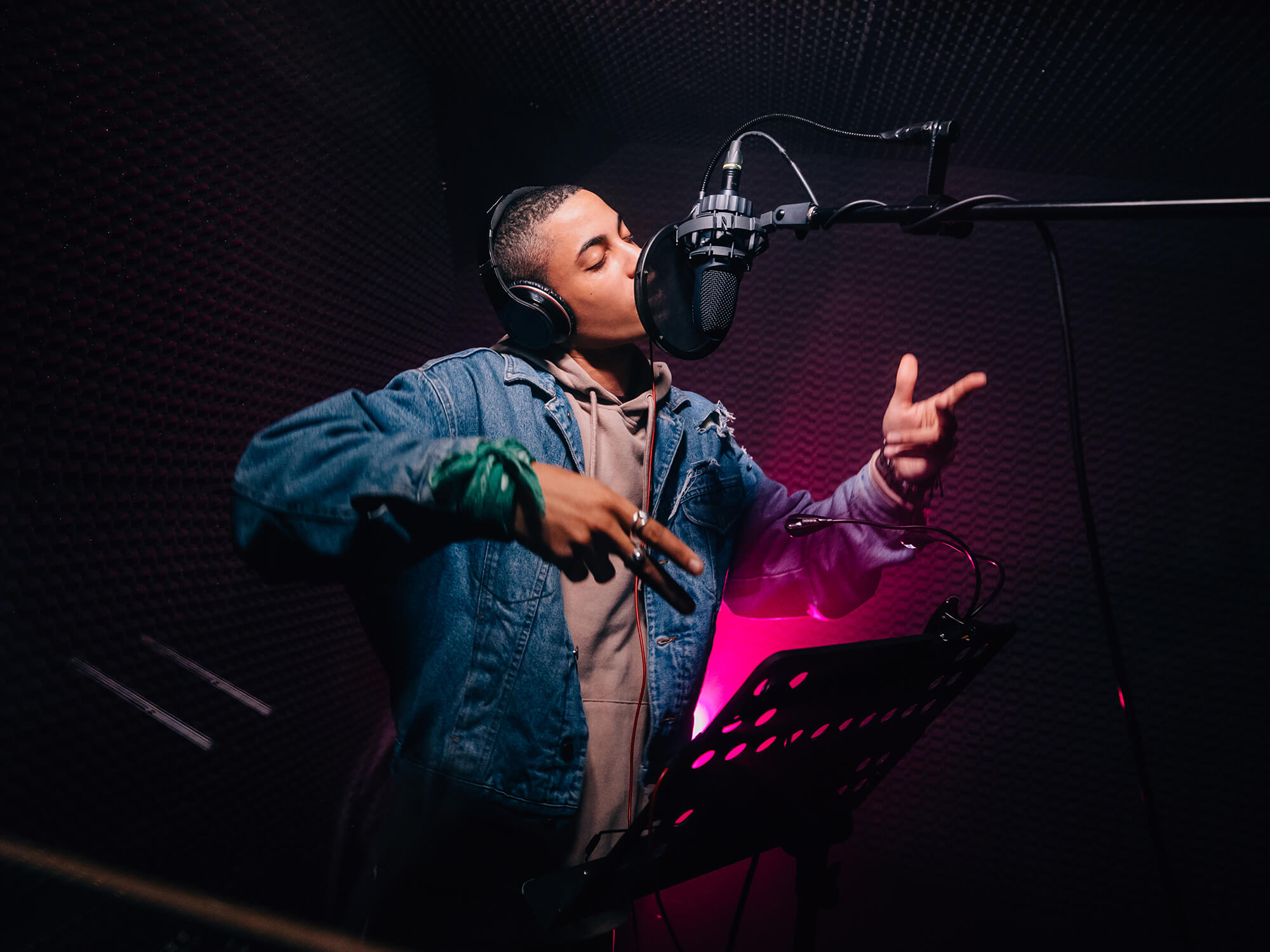
The Rap Vocal Chain: From Raw Take to Radio-Ready
A rap vocal chain isn't about stacking plugins until something sounds expensive. It's about solving specific problems in a specific order, and every session in my studio in Knoxville starts with the same core signal path before anything creative gets layered on top.
Step 1: Clean it up first
Before any coloring, run a high-pass filter around 80-100Hz to clear out rumble and mic handling noise, then use a subtractive EQ pass to notch out anything boxy or harsh, usually somewhere in the 300-500Hz mud zone or a bright peak around 3-5kHz depending on the mic. This isn't the fun part, but skipping it means every plugin after it just amplifies the problem instead of the vocal.
Step 2: Control the dynamics
Use a compressor set for 3-6dB of gain reduction on the loudest words, with a fast attack and medium release, to even out a performance that naturally has hot ad-libs and quiet pockets. If one compressor can't tame it without sounding squashed, split the job across two: a fast, transparent compressor first, then a slower one for tone and glue. Serial compression almost always beats one plugin doing all the work.
Step 3: Add tone and saturation
This is where the vocal starts to feel like a record instead of a phone memo. A touch of tape or tube saturation adds harmonic weight and helps a vocal sit forward in a busy trap beat without needing more volume. Keep it subtle - you want warmth, not distortion.
Step 4: EQ for presence
A second EQ pass, this time additive, is where you carve out space for the vocal to cut through 808s and hi-hats. A gentle boost around 2-4kHz adds clarity and consonant definition, and a shelf above 8-10kHz can add air without harshness if the take needs it.
Step 5: De-ess and finalize dynamics
Rap vocals delivered close to the mic get harsh sibilance fast. A de-esser targeted at the specific frequency where the S sounds live cleans that up without dulling the whole top end. Follow with a limiter set conservatively, just enough to catch stray peaks, not to change the character of the vocal.
Step 6: Space, not mush
Reverb and delay go last, and they should be used sparingly on a lead rap vocal. A short plate reverb or a slapback delay timed to the tempo adds dimension without pushing the vocal back in the mix. Automate it so it only shows up on held words or ends of phrases, not the whole verse.
Every chain should flex depending on the artist and the beat, but this order - clean, compress, color, EQ, de-ess, space - solves problems in the sequence they actually happen. Build a template around it once, save it, and every session in your DAW starts from a vocal that already sounds like a record. Check the beat catalog at owlspec.com for instrumentals built to sit under a vocal chain like this, or book a mix or master at owlspec.com/services if you'd rather hand off the technical side entirely.